What is the cost of implementing Healthcare RFID Wristband - UHF in a hospital?
Leave a message

In recent years, Radio-Frequency Identification (RFID) technology has revolutionized various industries, and the healthcare sector is no exception. Among the many applications of RFID in healthcare, the use of Healthcare RFID Wristband - UHF has gained significant traction. As a Healthcare RFID Wristband - UHF supplier, I have witnessed firsthand the transformative impact these wristbands can have on hospital operations. However, one question that often arises from potential clients is, "What is the cost of implementing Healthcare RFID Wristband - UHF in a hospital?" In this blog post, I will delve into the various factors that contribute to the cost of implementing these wristbands in a hospital setting.
Initial Investment Costs
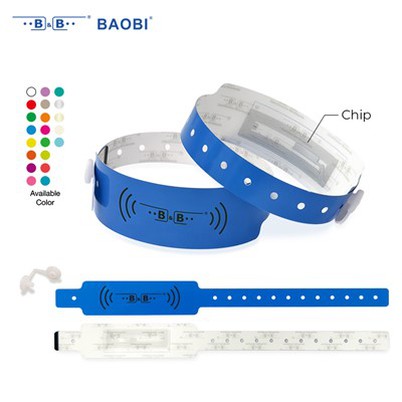
The first and most obvious cost associated with implementing Healthcare RFID Wristband - UHF is the initial investment in the wristbands themselves. These wristbands are specifically designed to withstand the rigors of a hospital environment, including frequent cleaning and exposure to various chemicals. They are also equipped with UHF RFID tags, which provide a long - range reading capability, making them ideal for tracking patients, medical equipment, and supplies.
The cost of each Healthcare RFID Wristband - UHF can vary depending on the specific features and quality of the band. On average, a basic UHF RFID wristband can cost anywhere from $1 to $5 per unit. However, if you opt for more advanced features such as biocompatible materials, printed QR codes, or tamper - evident designs, the cost per wristband can increase significantly. For a large hospital with a high patient turnover, the cost of purchasing a sufficient number of wristbands can be substantial.
In addition to the wristbands, hospitals also need to invest in RFID readers and software. RFID readers are used to scan the wristbands and collect data, while the software is responsible for processing and managing this data. The cost of RFID readers can range from a few hundred dollars for a basic handheld reader to several thousand dollars for a fixed - mount, high - performance reader. The cost of the software depends on the complexity of the system and the number of users. In general, hospitals can expect to spend anywhere from $10,000 to $50,000 on the initial setup of RFID readers and software.
Installation and Integration Costs
Once the wristbands, readers, and software are purchased, hospitals need to consider the cost of installation and integration. Installing RFID readers throughout the hospital requires careful planning and coordination to ensure optimal performance. This may involve hiring a professional installation team, which can add an additional cost of several thousand dollars, depending on the size and complexity of the hospital.


Integrating the RFID system with the hospital's existing information technology (IT) infrastructure is also a crucial step in the implementation process. This may involve working with the hospital's IT department or hiring an IT consultant to ensure seamless integration with the hospital's electronic health record (EHR) system, patient management system, and other relevant software applications. The cost of integration can vary widely depending on the complexity of the existing IT systems, but it can range from $5,000 to $20,000.
Training Costs
Another significant cost associated with implementing Healthcare RFID Wristband - UHF is training. Hospital staff, including nurses, doctors, and administrative personnel, need to be trained on how to use the RFID system effectively. This includes training on how to scan wristbands, access and interpret data, and troubleshoot any issues that may arise.
Training can be conducted in several ways, including in - person workshops, online courses, or on - the - job training. The cost of training depends on the number of staff members to be trained and the duration and intensity of the training program. On average, hospitals can expect to spend anywhere from $2,000 to $10,000 on training costs.
Operational Costs
Once the Healthcare RFID Wristband - UHF system is up and running, hospitals need to consider the ongoing operational costs. These include the cost of replacing worn - out or damaged wristbands, maintaining and upgrading the RFID readers and software, and paying for any technical support or maintenance services.
The cost of replacing wristbands can vary depending on the usage rate and the quality of the bands. On average, hospitals can expect to replace a certain percentage of their wristbands each year, which can add up to several thousand dollars in replacement costs. Maintaining and upgrading the RFID readers and software is also an ongoing expense. This may involve purchasing new software updates, replacing faulty components, or upgrading the hardware to improve performance. The cost of maintenance and upgrades can range from $2,000 to $10,000 per year, depending on the size and complexity of the system.
Potential Cost Savings
While the cost of implementing Healthcare RFID Wristband - UHF may seem high at first glance, it is important to consider the potential cost savings that can be achieved in the long run. One of the primary benefits of using RFID wristbands in a hospital is improved patient safety. By accurately tracking patients and their medical records, hospitals can reduce the risk of medical errors, such as misidentifying patients or administering the wrong medication. This can lead to significant cost savings by avoiding costly malpractice lawsuits and reducing the length of hospital stays.
In addition, RFID wristbands can also improve operational efficiency in the hospital. By automating the tracking of patients, medical equipment, and supplies, hospitals can reduce the time and effort spent on manual inventory management and patient tracking. This can lead to increased productivity and cost savings by reducing labor costs and minimizing the waste of resources.
Conclusion
In conclusion, the cost of implementing Healthcare RFID Wristband - UHF in a hospital is a complex calculation that involves several factors, including the initial investment in wristbands, readers, and software, installation and integration costs, training costs, and ongoing operational costs. However, when considering the potential cost savings and benefits in terms of improved patient safety and operational efficiency, the investment in an RFID wristband system can be well worth it.
If your hospital is considering implementing a Healthcare RFID Wristband - UHF system, I encourage you to reach out to our team for more information. We also offer Event RFID Wristband for other applications and Healthcare RFID Wristband solutions for different needs. We would be happy to discuss your specific requirements, provide a detailed cost breakdown, and guide you through the implementation process. Don't hesitate to contact us to start a conversation about how our RFID wristbands can transform your hospital operations.
References
- Roberts, D. (2018). RFID in Healthcare: Transforming the Patient Experience. Journal of Healthcare Technology Management.
- Smith, A. (2019). The Cost - Benefit Analysis of RFID Implementation in Hospitals. International Journal of Healthcare Operations Research.