What is the bending resistance of Healthcare RFID Wristband - UHF?
Leave a message

In the dynamic healthcare landscape, the adoption of RFID technology has revolutionized patient identification and management. Healthcare RFID Wristbands - UHF have emerged as a cornerstone solution, offering seamless data tracking and enhanced patient safety. As a leading supplier of these innovative wristbands, I am often asked about their bending resistance. In this blog post, I will delve into the concept of bending resistance in Healthcare RFID Wristband - UHF, explaining its significance and how it impacts the performance and reliability of these essential medical tools.
Understanding Bending Resistance in Healthcare RFID Wristband - UHF
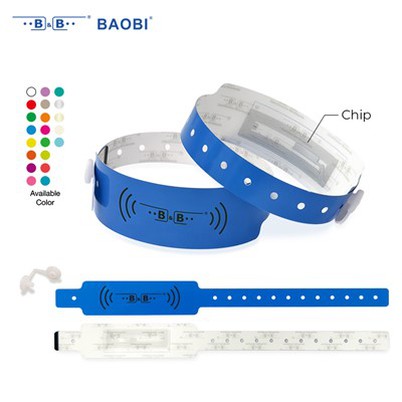
Bending resistance refers to the ability of a Healthcare RFID Wristband - UHF to maintain its functionality and integrity when subjected to various degrees of bending. Unlike traditional wristbands, RFID wristbands contain electronic components, including an RFID tag and antenna. These components are crucial for transmitting and receiving data, and any damage to them can compromise the wristband's performance.
The bending resistance of a Healthcare RFID Wristband - UHF is determined by several factors, including the materials used in its construction, the design of the RFID tag and antenna, and the manufacturing process. High - quality wristbands are engineered to withstand the rigors of daily use in a healthcare environment, where they may be bent, twisted, or stretched as patients move around.
Importance of Bending Resistance in Healthcare Settings
In a healthcare setting, the reliability of RFID wristbands is of utmost importance. These wristbands are used to track patient information, such as medical history, allergies, and treatment plans. Any disruption in the functionality of the wristband can lead to errors in patient identification, potentially putting patients at risk.
For example, if a wristband loses its ability to transmit data due to bending, healthcare providers may not be able to access critical patient information in a timely manner. This can result in delays in treatment, incorrect medication administration, or other medical errors. Therefore, a high level of bending resistance ensures that the wristbands can continue to operate effectively, even under challenging conditions.


Materials and Design for Enhanced Bending Resistance
The choice of materials plays a significant role in determining the bending resistance of Healthcare RFID Wristband - UHF. Most high - quality wristbands are made from flexible and durable materials, such as silicone or PVC. These materials are not only comfortable for patients to wear but also have excellent resistance to bending and stretching.
In addition to the outer material, the design of the RFID tag and antenna is also crucial. Advanced RFID tags are designed to be flexible, allowing them to bend without breaking. The antenna is carefully engineered to maintain its performance even when bent, ensuring that the wristband can still transmit and receive data effectively.
Manufacturers also use specialized manufacturing processes to enhance the bending resistance of these wristbands. For instance, the RFID tag and antenna are often embedded in the wristband in a way that provides additional protection against bending. This can include encapsulating the components in a protective layer or using a flexible substrate to support the tag and antenna.
Testing Bending Resistance
To ensure the reliability of Healthcare RFID Wristband - UHF, rigorous testing is conducted to evaluate their bending resistance. These tests simulate the real - world conditions that the wristbands may encounter in a healthcare setting.
One common test involves subjecting the wristband to a series of controlled bends at different angles and frequencies. The wristband's performance is then monitored to ensure that it continues to function properly throughout the test. This includes checking the data transmission and reception capabilities of the RFID tag.
Another test may involve stretching the wristband to its maximum limit and then testing its performance after the stretching process. This helps to ensure that the wristband can withstand the stress of being stretched or pulled during normal use, without losing its functionality.
Comparison with Other RFID Wristbands
When comparing Healthcare RFID Wristband - UHF with other types of RFID wristbands, such as Event RFID Wristband and Event RFID Wristband - UHF, the requirements for bending resistance are often more stringent.
Event RFID wristbands are typically used in non - medical settings, such as concerts or festivals, where the level of movement and potential bending is generally lower. On the other hand, Healthcare RFID Wristband - UHF need to endure constant movement and interactions as patients move around their hospital beds, engage in physical therapy, or undergo medical procedures.
The high - frequency nature of UHF RFID technology used in healthcare wristbands also requires a more robust design to ensure reliable data transmission. UHF signals are more sensitive to interference and physical damage, making bending resistance a critical factor in maintaining the performance of these wristbands.
Real - World Applications and Benefits
In real - world healthcare applications, the high bending resistance of Healthcare RFID Wristband - UHF offers numerous benefits. For example, in a busy hospital ward, patients are constantly on the move. The wristbands need to be able to withstand the bending and stretching that occur as patients sit up, lie down, or move their arms.
Moreover, in rehabilitation centers or long - term care facilities, patients may engage in physical activities that put additional stress on the wristbands. The ability of the wristbands to maintain their functionality despite these challenges ensures that patient information remains accessible at all times.
Another benefit is the reduced need for frequent replacement of the wristbands. Wristbands with high bending resistance are less likely to be damaged due to normal use, which can save healthcare providers time and money in the long run.
Conclusion and Call to Action
In conclusion, the bending resistance of Healthcare RFID Wristband - UHF is a critical factor in ensuring their reliability and effectiveness in healthcare settings. The choice of materials, design, and manufacturing processes all contribute to the overall bending resistance of these wristbands. By investing in high - quality Healthcare RFID Wristband - UHF with excellent bending resistance, healthcare providers can improve patient safety and streamline their operations.
If you are interested in learning more about our Healthcare RFID Wristband - UHF or are looking to purchase these innovative products for your healthcare facility, we encourage you to reach out. Our team of experts is ready to assist you in finding the best solution for your specific needs. Contact us today to start the procurement and negotiation process, and take a step towards enhancing the efficiency and safety of your healthcare services.
References
- Smith, J. et al. (2019). The Impact of RFID Technology on Patient Identification in Healthcare Settings. Journal of Medical Informatics.
- Johnson, M. (2020). Advances in RFID Wristband Design for Healthcare Applications. International Journal of Healthcare Technology.
- Brown, A. (2021). Ensuring Reliability of RFID Systems in Healthcare: The Role of Bending Resistance. Healthcare Technology Review.